

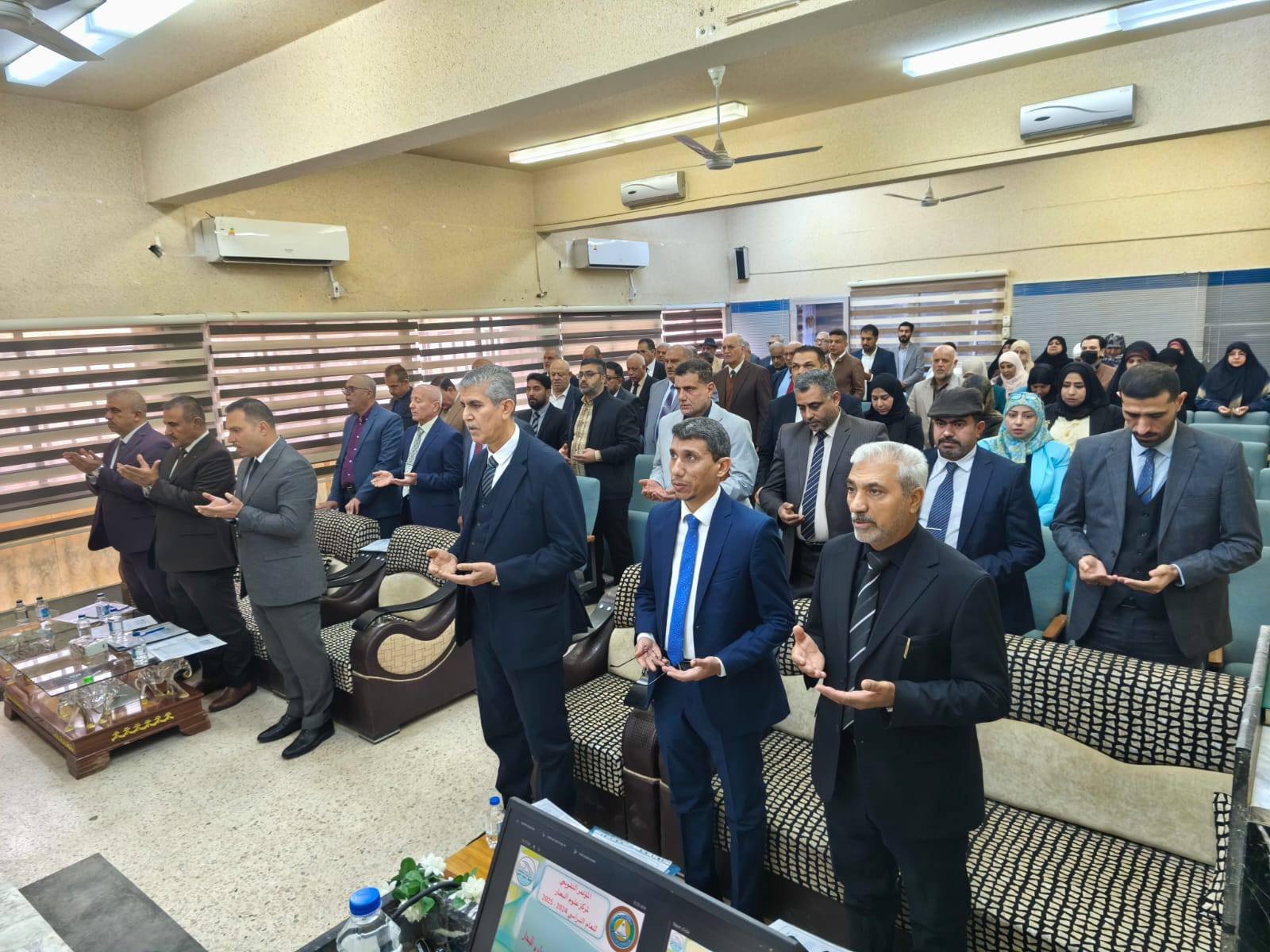
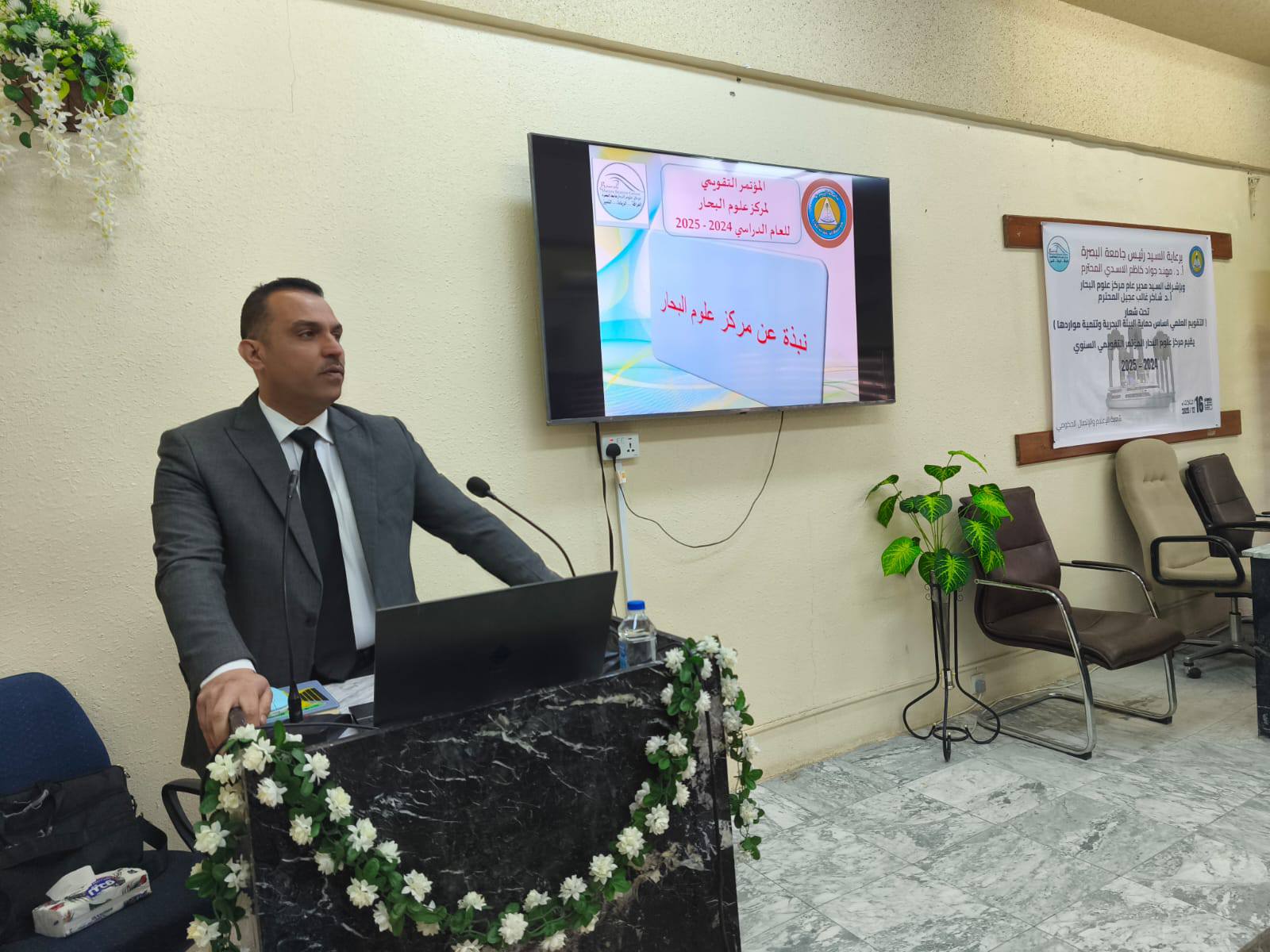
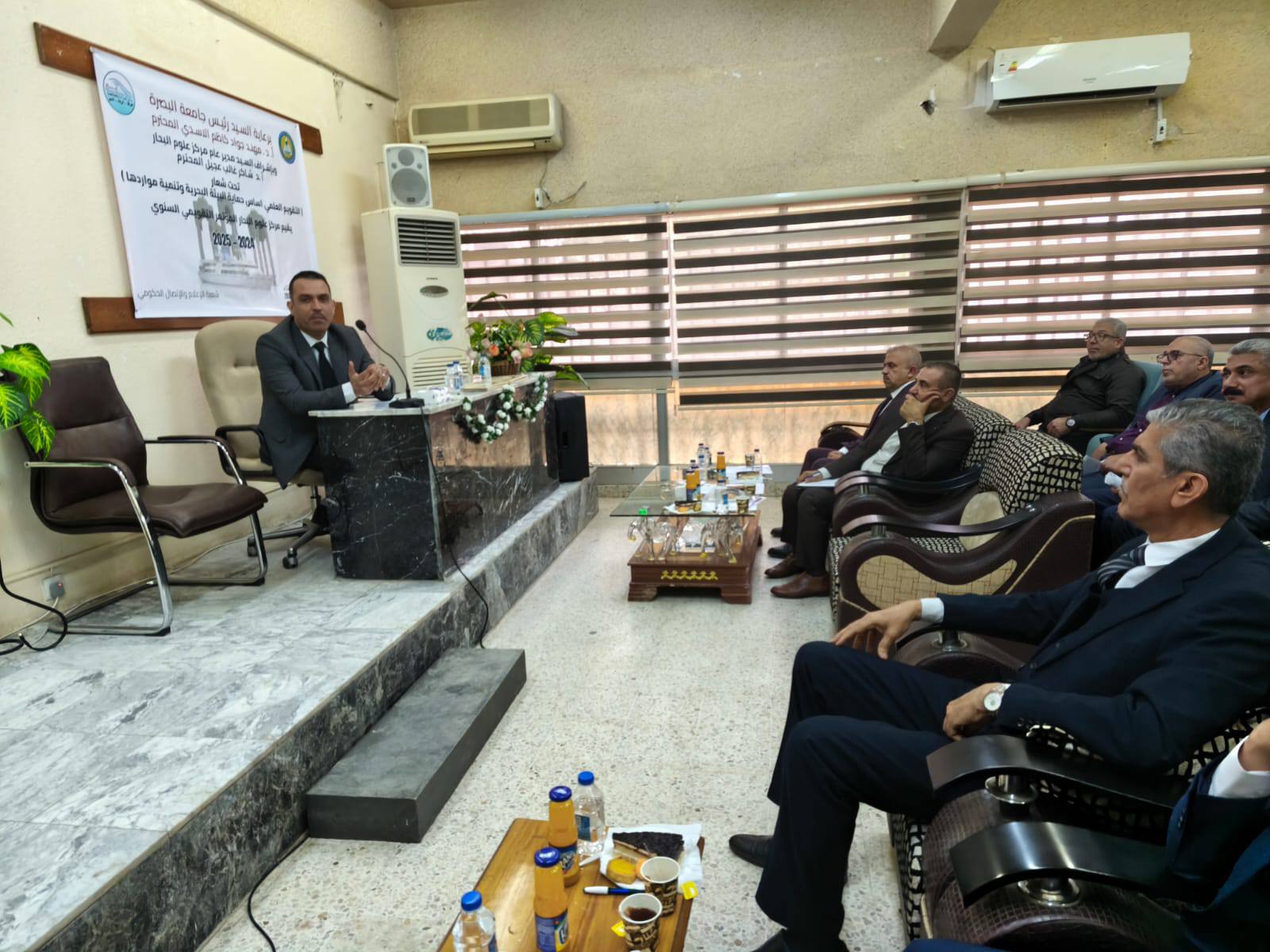
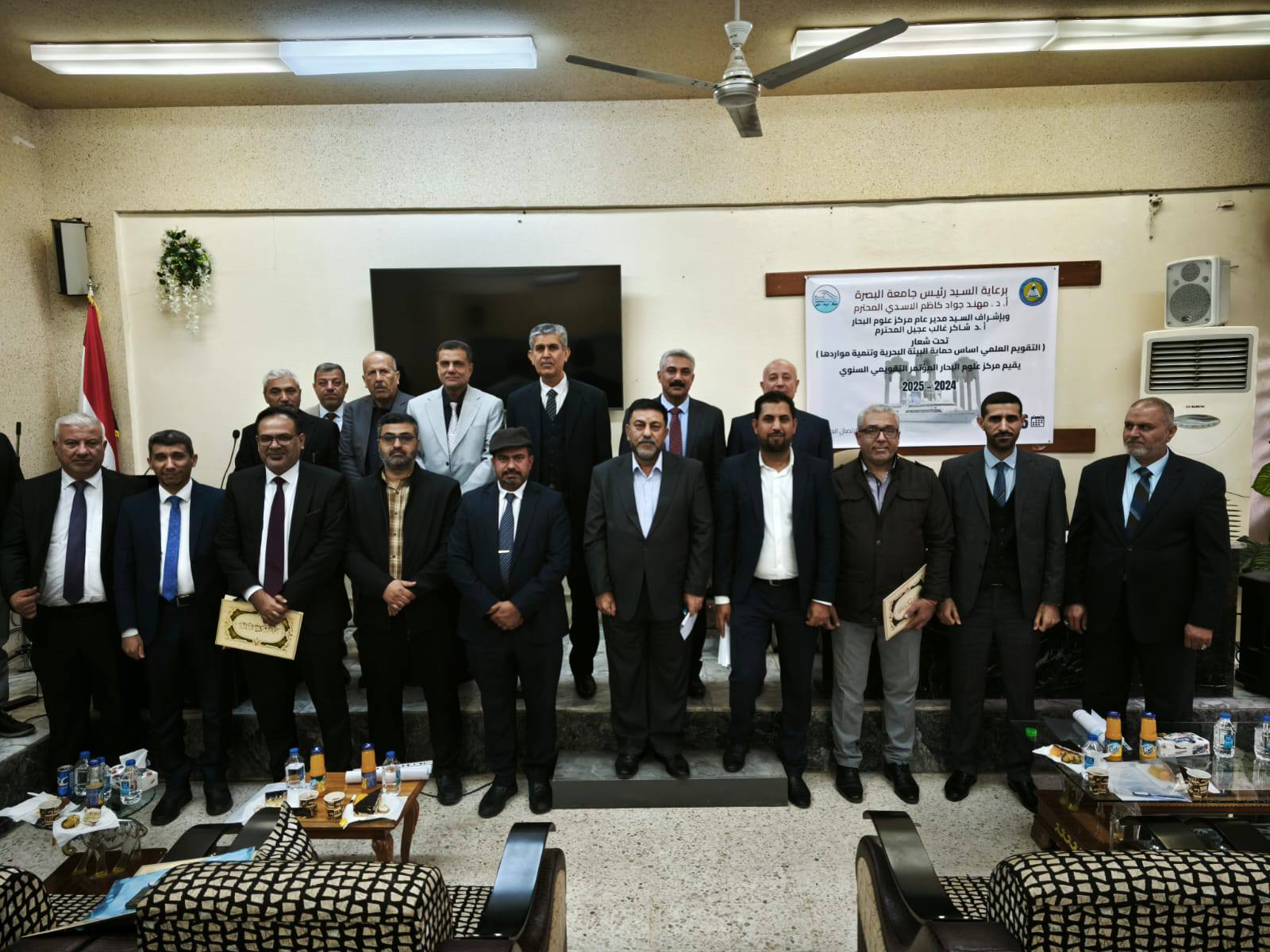
Under the patronage of the President of the University of Basra, Prof. Dr. Muhannad Jawad Kazem, and the supervision of the Director General of the Marine Science Center, Prof. Dr. Shaker Ghalib Ajeel
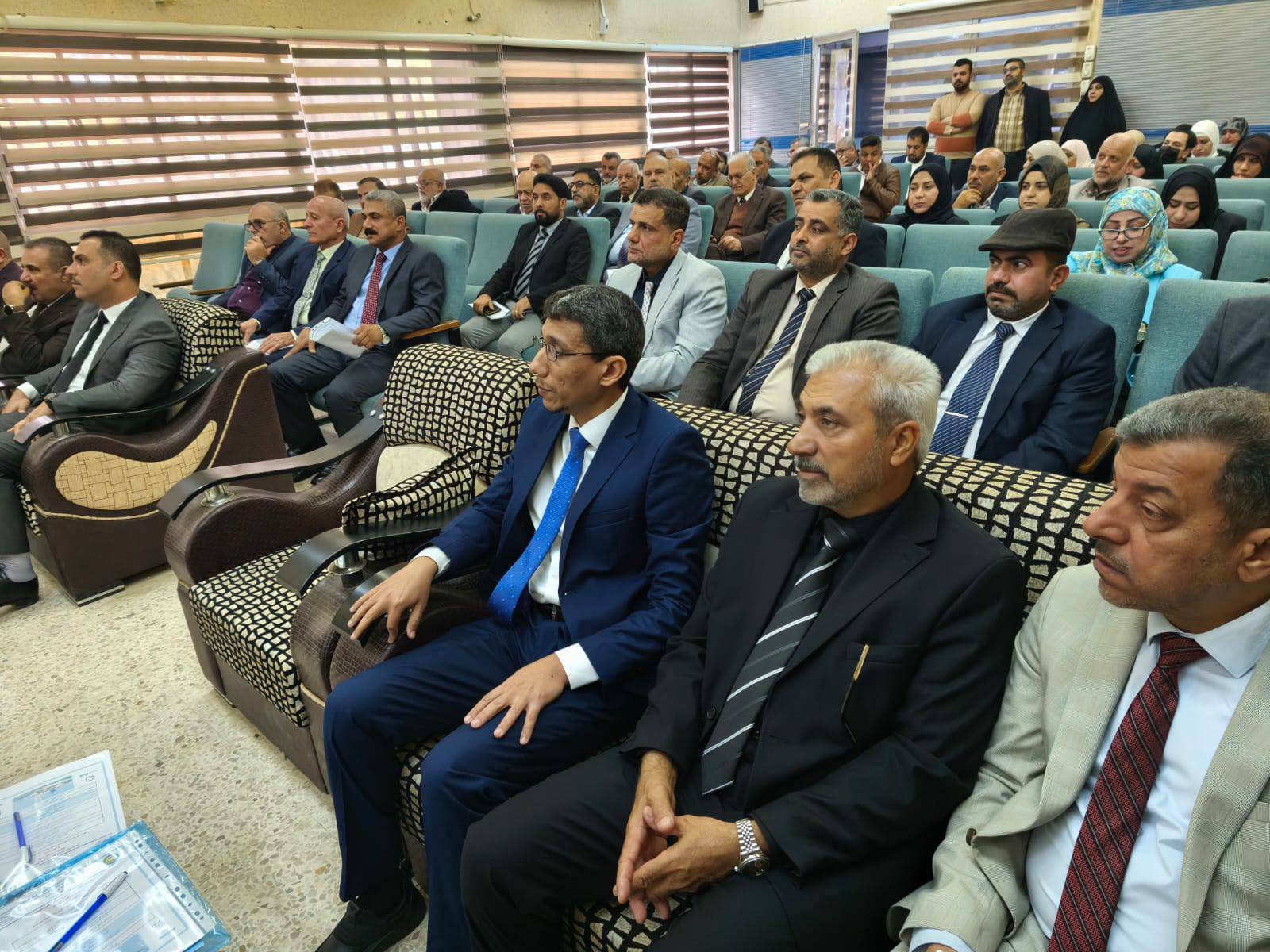
and in the presence of the Assistant President of the University of Basra for Scientific Affairs, Prof. Dr. Haider Khazal Al-Kaabi, the Marine Science Center held its annual evaluation conference for the period 2024-2025, under a clear slogan that combines scientific authenticity and environmental responsibility: “Scientific evaluation is the basis for protecting the marine environment and developing its resources.”
The Assistant President for Scientific Affairs, Dr. Haider Khazaal, pointed out that the center's staff, regardless of their scientific titles and specializations, have achieved important accomplishments over the past years. The scientific assistant praised the Marine Science Center for achieving second place among the university's departments with a ratio of 2.8 (researcher-to-research ratio) for the past academic year.
He emphasized his commitment to providing the necessary support to address any challenges they face, thereby contributing to the advancement of scientific and research standards at the University of Basra.
The conference was held to emphasize the pivotal role played by the center in formulating sound research policies, evaluating the annual performance of its various scientific projects and activities, and developing ambitious future plans to serve the marine environment and its abundant resources.
The conference reviewed and discussed the Center's research, field, and scientific achievements during the past year 2024, analyzed the challenges it faced, and developed frameworks and implementation programs for 2025, in line with the Center's vision and sustainable development goals, with a focus on projects to monitor and protect marine ecosystems, explore ways to sustainably develop living and non-living marine resources, support food security and the national economy, and establish science as the basis for any development or environmental protection work.
Important News

viewed most
.jpg)
.png)